
 admin
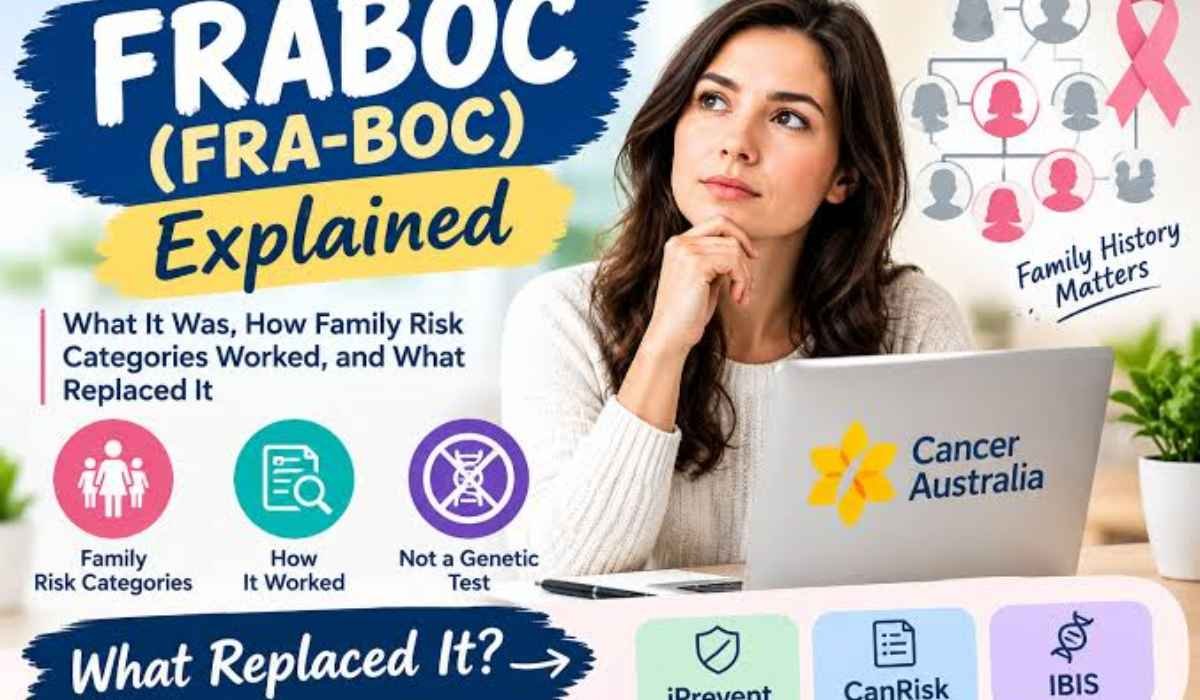
The FRABOC Guide helps readers understand the former Australian Familial Risk Assessment – Breast and Ovarian Cancer tool, its purpose, how it evaluated family medical history, and why it is no longer available. FRABOC was developed to help healthcare professionals identify women who might have an increased risk of breast or ovarian cancer because of inherited family patterns. It was not a medical diagnosis or genetic test. Understanding its background can help people interpret older medical documents and learn about modern cancer risk assessment options. smogon.co.uk+2
Quick Bio Table
| Detail | Information |
|---|---|
| Name | FRABOC / FRA-BOC |
| Full form | Familial Risk Assessment – Breast and Ovarian Cancer |
| Origin | Australia |
| Field | Healthcare and cancer risk assessment |
| Main purpose | Assessing inherited cancer risk |
| Intended users | Doctors and healthcare professionals |
| Information used | Family medical history |
| Cancer types | Breast and ovarian cancer |
| Genetic test | No |
| Diagnostic test | No |
| Current status | Retired |
| Modern alternative | iPrevent and other validated assessment resources |
1. What Is FRABOC?
FRABOC refers to FRA-BOC, an abbreviation for Familial Risk Assessment – Breast and Ovarian Cancer. It was an online clinical resource designed to help healthcare professionals understand possible inherited cancer risks. The tool focused mainly on family medical history and helped doctors identify patterns that could suggest an increased likelihood of breast or ovarian cancer. It provided guidance for further discussions and medical decisions rather than confirming whether someone had cancer. Although the original resource is no longer available, its approach remains relevant to understanding the importance of family history in healthcare.
2. Understanding the Full Meaning
The full meaning of FRA-BOC explains the purpose behind its development. The first part, Familial Risk Assessment, describes evaluating health conditions that may occur more frequently within families. The second part, Breast and Ovarian Cancer, identifies the two cancer types covered by the assessment. These conditions can sometimes share inherited risk factors, making family history particularly important. Understanding the abbreviation helps readers recognize why doctors previously used the resource when discussing hereditary cancer patterns and deciding whether additional medical evaluation might be appropriate.
3. Why Was the FRABOC Tool Created?
Healthcare professionals need reliable information to understand whether a patient’s family history suggests an increased risk of certain diseases. The original tool was created to support this process for breast and ovarian cancer. It offered a structured way to collect relevant family information and organize it into meaningful risk categories. Before such resources became available, assessing complicated family histories could require considerable time and specialist knowledge. The tool helped make initial assessments more consistent and supported doctors when deciding whether a patient might benefit from further investigation.
4. Who Developed the Original Assessment?
The original assessment was associated with Cancer Australia, the Australian Government’s national cancer agency. It was designed as a professional resource rather than a general entertainment website or commercial product. Its development reflected the importance of identifying inherited cancer risks and helping healthcare professionals discuss appropriate next steps with patients. Medical organizations have continued improving risk assessment methods as research and technology have developed. Readers researching its history should distinguish official healthcare information from unrelated websites that use similar wording without providing reliable evidence.
5. Who Was Supposed to Use It?
The resource was primarily intended for general practitioners, nurses, and other qualified healthcare professionals. These individuals could collect information about a patient’s relatives, cancer diagnoses, and ages at diagnosis before interpreting possible inherited risk. Patients were part of the consultation, but the assessment was not designed to replace professional judgment. A trained healthcare provider could explain the meaning of the results and discuss whether specialist advice was necessary. This professional approach helped ensure that family information was considered in its proper medical context.
6. How Did the Assessment Work?
The assessment relied mainly on information about family members and their medical histories. Healthcare professionals considered which relatives had experienced breast or ovarian cancer, how closely related they were to the patient, and the ages at which diagnoses occurred. Different family patterns could indicate different levels of possible inherited risk. The collected information helped organize a patient’s history into broad categories. However, the result was an estimate rather than a prediction. It could not determine with certainty whether someone would develop cancer during their lifetime.
7. Why Family Medical History Matters
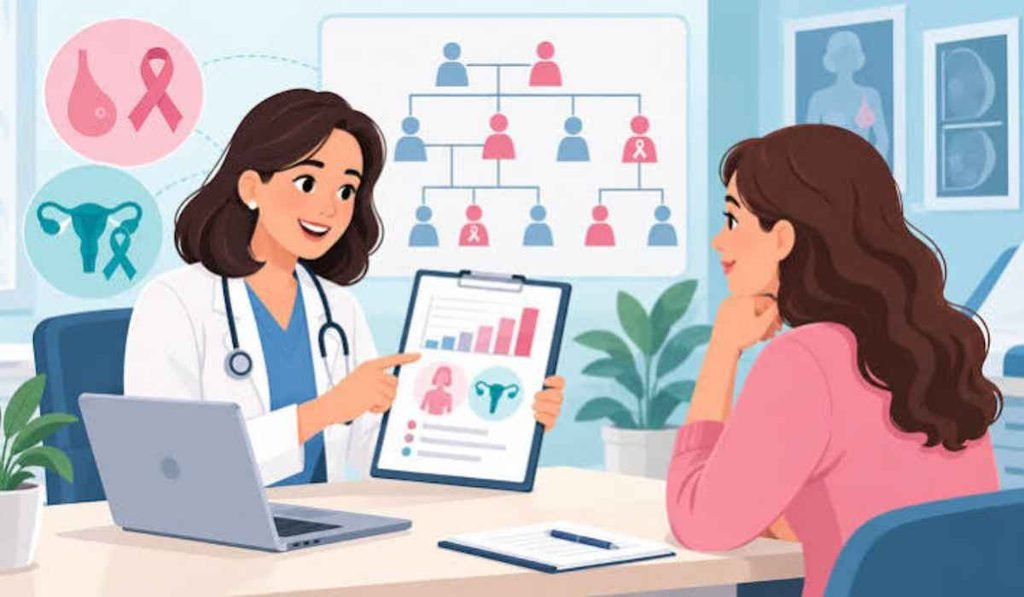
Family medical history can provide important clues about inherited health risks. If several close relatives have experienced particular cancers, healthcare professionals may investigate whether a hereditary factor could be involved. The age of diagnosis, relationship between affected relatives, and types of cancer are all relevant details. However, having relatives with cancer does not automatically mean another family member will develop the same condition. Likewise, people without a known family history can still develop cancer. A complete assessment considers multiple factors rather than relying on one family detail.
8. Important Information Collected During Assessment
A useful family history includes information about both maternal and paternal relatives. Doctors may ask about parents, siblings, grandparents, aunts, uncles, and other relatives where relevant. They may also ask which cancer was diagnosed and the approximate age when it occurred. Information about multiple cancers in one person can also be important. Accurate details help healthcare professionals understand whether a family pattern deserves additional attention. When information is incomplete, doctors may explain how to collect further records or discuss the limitations of the available history.
9. Understanding the Three Historical Risk Categories
The original assessment used broad categories to communicate FRABOC possible levels of inherited risk. These included average risk, moderately increased risk, and potentially high risk. Each category helped healthcare professionals understand whether routine care or additional assessment might be appropriate. The categories were not diagnoses and did not guarantee future outcomes. They were intended to support medical conversations and guide decisions about possible referrals. These historical classifications should not be used independently to estimate a person’s current cancer risk because medical assessment methods have evolved.
10. What Did Average Risk Mean?
Average risk generally described a family history without strong indicators of significantly increased inherited breast or ovarian cancer risk. It did not mean that a person had no possibility of developing cancer. Many people diagnosed with cancer do not have a clearly identifiable family history. Lifestyle, age, reproductive factors, environmental influences, and other circumstances can also contribute to overall health risks. The category was therefore a way to describe a particular family-history pattern, not a promise of lifelong protection or a reason to ignore recommended health screening.
11. What Did Moderately Increased Risk Mean?
Moderately increased risk referred to family-history patterns that suggested a greater possibility of inherited cancer risk than average. For example, a close relative diagnosed at a younger age or multiple affected relatives could attract additional attention. Such patterns did not establish that an inherited genetic change was present. Instead, they indicated that a healthcare professional might need to consider the patient’s history more carefully. Depending on the circumstances, further risk evaluation, personalized screening discussions, or specialist advice could be appropriate.
12. What Did Potentially High Risk Mean?
Potentially high risk described family histories containing stronger indicators of hereditary cancer susceptibility. Several close relatives with relevant cancers, unusually young diagnoses, or particular combinations of cancer types could be important. Male breast cancer and certain patterns involving ovarian cancer may also raise questions about inherited genetic factors. However, a high-risk classification did not mean that cancer was inevitable. It indicated that professional assessment and possibly referral to a family cancer clinic could be worthwhile.
13. Was FRABOC a Cancer Diagnosis?
No. It was not designed to identify existing cancer or confirm a medical condition. Instead, it helped healthcare professionals estimate possible future risk based on family history. Cancer diagnosis involves separate clinical procedures, which may include imaging, physical examinations, laboratory investigations, and biopsies where appropriate. Understanding this distinction is important for anyone who discovers the term in an old referral letter or medical record. An earlier risk assessment does not automatically mean that a person had cancer or received a cancer diagnosis.
14. Was It a Genetic Testing Service?
The original assessment was not a genetic testing service. It did not collect DNA samples or identify specific inherited genetic variants. Genetic testing is a separate medical process that examines genetic material for changes associated with particular health conditions. When family history suggests a possible inherited risk, a doctor or genetic counsellor may discuss whether genetic testing is appropriate. The decision depends on individual circumstances, medical history, family patterns, and professional guidance. A historical assessment should never be confused with a confirmed genetic test result.
15. Understanding BRCA1 and BRCA2
BRCA1 and BRCA2 are genes that help the body repair damaged DNA. Certain inherited changes in these genes can increase the risk of breast, ovarian, and some other cancers. Their names frequently appear in discussions about hereditary breast and ovarian cancer because of their established medical importance. However, not every person with a family history of these cancers carries a BRCA-related genetic change. Genetic counselling and appropriate testing can help clarify individual circumstances. The former assessment considered family patterns but did not independently identify BRCA1 or BRCA2 mutations.
16. Why the Original Tool Was Retired
Healthcare resources change as medical research, technology, and clinical recommendations improve. The original tool is no longer available through Cancer Australia’s website. This means readers should not assume that an old assessment can be accessed or used for a new clinical decision. Modern resources can consider additional information and offer more detailed approaches to risk evaluation. The retirement of an older resource does not mean that family-history assessment has become unnecessary. Instead, it reflects the ongoing development of healthcare methods and updated clinical guidance.
17. What Is iPrevent?
iPrevent is a modern breast cancer risk assessment and risk-management decision-support resource developed by the Peter MacCallum Cancer Centre. It can help healthcare professionals consider personal and family information when discussing breast cancer risk and possible management strategies. Unlike the historical assessment, it offers a more detailed approach that incorporates a wider range of relevant factors. It is important to understand that it is a professional decision-support resource, not a substitute for individual medical advice. Its suitability depends on the patient’s circumstances and the clinical setting.
18. Comparing FRABOC and iPrevent
Both resources relate to breast cancer risk assessment, but they belong to different stages of clinical development. The older tool concentrated mainly on family-history information and broad risk categories. iPrevent uses a more comprehensive approach to support risk estimation and management discussions. The difference reflects improvements in medical research and digital healthcare resources. Neither tool should be treated as a cancer diagnosis. Healthcare professionals remain responsible for interpreting results and explaining which screening or management options are appropriate for each individual.
19. Other Modern Cancer Risk Assessment Resources
Several resources may be used in modern hereditary cancer assessment, depending on the patient’s location and medical circumstances. CanRisk and the BOADICEA model are examples of approaches used to estimate inherited breast and ovarian cancer risks. The IBIS or Tyrer-Cuzick model is another resource used in breast cancer risk assessment. These tools do not all serve identical purposes or use exactly the same information. Their suitability depends on clinical guidance, available records, and the expertise of the healthcare professional conducting the assessment.
20. What to Do If You Find It in an Old Medical Record
Finding the term in an older medical document does not automatically indicate a serious medical problem. It may simply refer to a historical family-history assessment conducted during a previous healthcare appointment. The first step is to keep the document and ask your current doctor to explain its context. If possible, bring information about relatives’ diagnoses and ages when cancer was identified. A healthcare professional can decide whether the older information remains useful or whether a new assessment should be considered.
21. The Importance of Genetic Counselling
Genetic counselling helps individuals understand inherited health risks and make informed decisions about possible testing. A genetic counsellor may review family history, explain inheritance patterns, discuss testing limitations, and describe possible results. This process can also help patients understand what genetic information may mean for other relatives. Counselling is especially valuable when several family members have experienced related cancers or when an inherited genetic condition is suspected. It provides an opportunity to discuss concerns with a trained professional instead of relying on online assumptions.
22. Symptoms and Cancer Screening Are Different
Risk assessment and cancer screening serve different purposes. A risk assessment considers the possibility of developing a disease in the future, while screening aims to identify possible disease before symptoms appear. Diagnostic investigations may be recommended when symptoms or abnormal screening results require further examination. A family-history assessment cannot replace mammograms, clinical examinations, or other investigations recommended by healthcare professionals. Anyone experiencing a concerning breast change, unusual symptoms, or persistent health concerns should seek appropriate medical advice rather than relying on an old risk category.
23. How to Prepare for a Family Cancer History Appointment
Preparation can make a healthcare appointment more useful. Write down the names of relatives who experienced breast, ovarian, or other relevant cancers, together with their relationship to you and approximate ages at diagnosis. Include information from both sides of the family whenever possible. If relatives have medical reports or genetic test results, ask whether copies can be shared appropriately. Do not worry if some details are unavailable. Your healthcare professional can explain what information is important and how to proceed when the family history is incomplete.
24. Common Misunderstandings About the Tool
Several misunderstandings can arise because the name appears in older documents and online articles. Some people assume it was a genetic test, while others believe it diagnosed breast or ovarian cancer. Neither interpretation is correct. It was a clinical risk assessment resource based primarily on family history. Another misconception is that an older risk classification remains suitable for making present-day healthcare decisions. Medical recommendations can change, so current concerns should always be discussed with a qualified professional using appropriate modern resources.
25. Benefits of Understanding Its History

Learning about the former assessment helps readers understand how healthcare professionals have approached hereditary cancer risk. It also explains why family history remains a valuable part of preventive healthcare. Older medical records can contain useful background information, particularly when they document relatives’ diagnoses and previous consultations. Understanding the original purpose prevents confusion between risk estimation, genetic testing, screening, and diagnosis. It also encourages patients to ask informed questions and seek updated medical advice when their circumstances or family history changes.
26. Limitations of Historical Risk Assessments
An older assessment has limitations because it reflects the information, research, and clinical recommendations available when it was developed. Family circumstances may also change over time as additional relatives receive diagnoses or new genetic information becomes available. A historical result cannot automatically account for every modern risk factor or updated clinical recommendation. For these reasons, old categories should be treated as historical information rather than current medical conclusions. A healthcare professional can review the original findings and decide whether a new evaluation is necessary.
27. How Technology Has Improved Cancer Risk Evaluation
Digital healthcare technology has improved the way medical professionals organize information and estimate disease risks. Modern assessment resources may incorporate family history, personal characteristics, reproductive information, and other relevant factors. These developments can help clinicians have more detailed conversations with patients about screening and prevention. However, technology does not remove the need for professional judgment. Risk models depend on the quality of the information entered and their intended clinical population. A qualified healthcare professional should always interpret results in the context of the patient’s circumstances.
28. The Role of Prevention and Healthy Habits
Preventive healthcare involves more than understanding inherited risk. Regular medical appointments, recommended screening, physical activity, balanced nutrition, and avoiding tobacco can support overall health. These habits cannot guarantee that cancer will never develop, and they cannot eliminate an inherited genetic risk. Nevertheless, they are important parts of general health management. People with a concerning family history should discuss personalized prevention and screening options with their doctors. Recommendations may differ depending on age, previous medical history, family patterns, and other individual factors.
29. Why Reliable Medical Sources Matter
Health information online can sometimes be incomplete, outdated, or misleading. Readers should prioritize government health agencies, established hospitals, professional medical organizations, and peer-reviewed research when investigating cancer risk. Websites that make unsupported promises about diagnosing or preventing cancer should be approached carefully. The historical resource should also be distinguished from unrelated websites that happen to use similar terminology. Checking the publication date and original source helps readers understand whether information remains relevant. Reliable information is especially important when making decisions about genetic testing and cancer screening.
30. The Future of Family-Based Cancer Risk Assessment
Family-based cancer risk assessment will continue evolving as researchers learn more about genetics, medical history, and disease development. Improved digital models may help healthcare professionals combine different types of information more effectively. Research into inherited genetic changes can also support more informed screening and prevention strategies. However, future developments will still require careful clinical interpretation, privacy protection, and clear communication with patients. The central principle will remain the same: understanding a person’s background can help healthcare professionals make better-informed decisions about appropriate care.
31. Final Thoughts on FRABOC
Understanding the FRABOC Guide provides useful historical context about hereditary breast and ovarian cancer risk assessment in Australia. The original FRA-BOC resource helped healthcare professionals evaluate family-history patterns, identify possible increased risks, and consider further medical advice. It was never a cancer diagnosis or genetic testing service, and it is no longer available through Cancer Australia. Modern resources, including iPrevent and other validated assessment models, support more current clinical discussions. Anyone concerned about inherited cancer risk should consult a qualified healthcare professional and use reliable resources such as Breast Cancer Institute family-history information and National Cancer Institute.
32. How Family Members Can Support Better Assessments
Family members can sometimes help provide accurate medical information when someone is preparing for a hereditary cancer assessment. Relatives may remember the ages at which diagnoses occurred, the types of cancer involved, and whether genetic testing was previously completed. Sharing this information with permission can help create a more complete family history. However, nobody should feel pressured to disclose private medical information. Healthcare professionals can explain how to handle missing details and respect the privacy of everyone involved.
33. Why Age at Diagnosis Is Important
The age at which a relative develops cancer can be an important part of hereditary risk evaluation. Certain cancers diagnosed at unusually young ages may encourage doctors to investigate possible inherited factors. Multiple diagnoses occurring across generations can also provide useful clues. However, age alone cannot establish whether a person has an inherited genetic condition. Doctors consider the complete family pattern, relevant medical records, and other personal factors before making recommendations. Accurate information is therefore more helpful than assumptions based on one relative’s experience.
34. Breast and Ovarian Cancer: Understanding the Connection
Breast and ovarian cancer are different diseases, but certain inherited genetic changes can increase the risk of developing both. This connection explains why healthcare professionals historically considered them together when examining family medical histories. BRCA1 and BRCA2 are particularly well-known examples of genes associated with hereditary cancer susceptibility. Nevertheless, these cancers can develop for many reasons, and not every affected family has an identifiable inherited genetic change. Professional assessment helps determine whether genetic counselling, testing, or additional screening discussions may be appropriate.
35. Medical Privacy and Personal Information
Family cancer history is sensitive medical information that should be handled carefully. Patients should understand how their healthcare provider collects, stores, and uses personal details. Genetic information may also have implications for biological relatives, making privacy and informed consent important considerations. Before participating in genetic testing, individuals can ask about possible results, confidentiality, and how information may be shared. A trustworthy healthcare professional should explain these issues clearly and provide an opportunity to ask questions before any decisions are made.
36. Making Informed Healthcare Decisions
Making informed healthcare decisions requires understanding both the benefits and limitations of available assessment methods. Patients should ask what a particular risk estimate means, which factors were considered, and whether additional investigations are recommended. They can also ask how frequently their risk should be reviewed. A risk estimate should not be interpreted without considering its context, because different tools may produce different results. Open communication between patients and healthcare professionals helps ensure that decisions reflect reliable evidence and individual circumstances.
37. Why Updated Family History Is Essential
Family history is not necessarily permanent information. A person may learn that another relative has developed cancer, receive previously unavailable medical records, or discover that a family member has undergone genetic testing. These developments can change the information available to a healthcare professional. Updating family details during medical appointments can therefore be useful, particularly when there is a known pattern of related cancers. An old assessment may still provide historical context, but updated information is important when considering present-day risk.
38. Understanding the Difference Between Risk and Certainty
One of the most important lessons from historical cancer assessment is that risk does not equal certainty. A person classified as having increased risk may never develop cancer, while someone classified as having average risk may still receive a diagnosis. Risk models estimate probabilities based on available information; they cannot predict an individual’s future with complete accuracy. Understanding this distinction can reduce unnecessary anxiety and prevent false reassurance. Patients should discuss the meaning of their results with professionals who can explain the limitations.
39. Finding Trustworthy Information Online
When researching hereditary cancer, readers should look for information published by recognized healthcare institutions. Government cancer agencies, university hospitals, specialist medical organizations, and established research institutions are generally better starting points than anonymous websites. Check whether an article identifies its sources, explains its publication date, and distinguishes general education from medical advice. Avoid websites claiming that a simple online questionnaire can diagnose cancer or guarantee prevention. Reliable research supports better conversations with doctors and reduces the likelihood of making decisions based on misinformation.
40. Frequently Asked Questions
1. What does FRABOC stand for?
– FRABOC stands for Familial Risk Assessment – Breast and Ovarian Cancer, a former Australian clinical tool for evaluating inherited cancer risk.
2. Is FRABOC still available?
– No. The original tool is no longer available through Cancer Australia’s website. More modern assessment resources are available.
3. Was FRABOC a genetic test?
– No. It assessed family medical history and did not examine DNA or identify inherited genetic mutations.
4. What replaced the original FRABOC tool?
– iPrevent is a validated modern breast cancer risk assessment and risk-management resource used to support discussions between women and doctors.
5. What should I do if FRABOC appears in my medical records?
– Keep the document and discuss it with your doctor, who can explain the historical assessment and recommend whether an updated evaluation is appropriate.
Conclusion
The FRABOC Guide offers an informative introduction to the history, purpose, and development of familial breast and ovarian cancer risk assessment. The original tool helped healthcare professionals understand family medical histories and identify patterns that could require further investigation. Although it has been retired, its underlying focus on inherited risk remains important in modern healthcare. For additional background, readers can explore Wikipedia’s Breast Cancer article and consult Cancer Australia’s official breast cancer information for updated guidance. Remember that personal cancer risk should always be evaluated by a qualified healthcare professional.